Travel Planner
“A Trip to Big Bay”
Episode #2310 Travel Planner
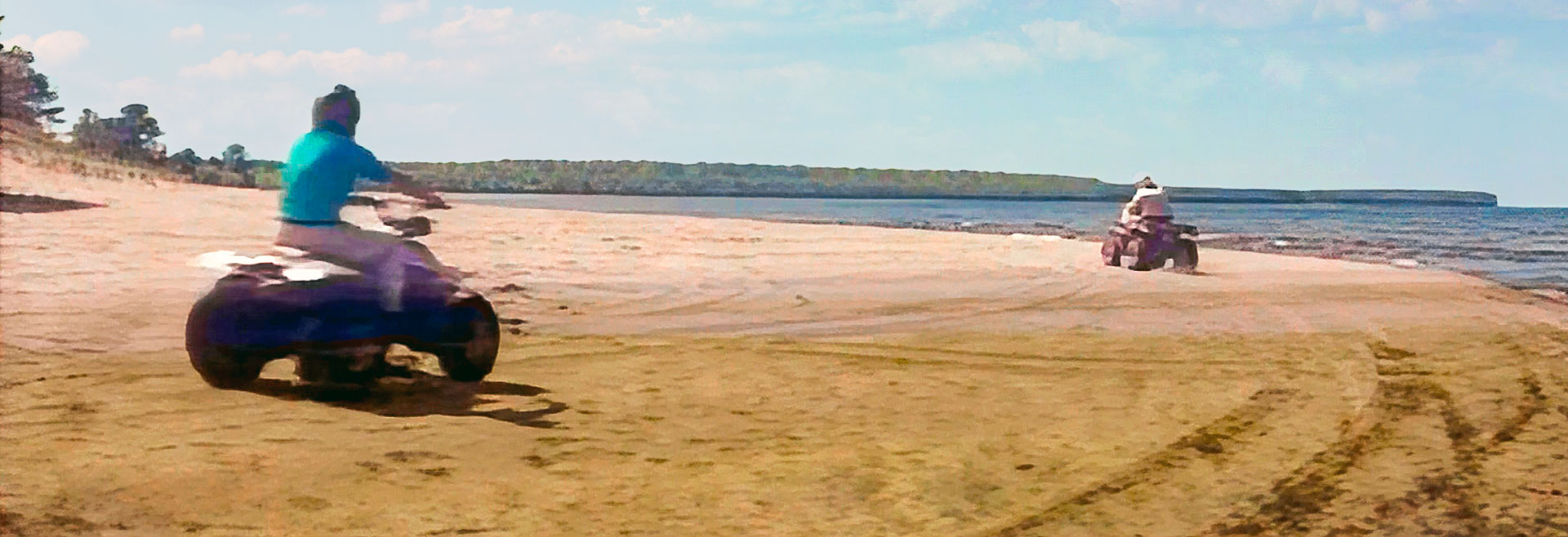
This time on Great Getaways, Tom O’Boyle heads north to the rugged shoreline of Big Bay, Michigan — a town rich in history, outdoor adventure, and Lake Superior beauty. From a visit to the historic Thunder Bay Inn to climbing aboard ATVs and exploring the backroads of the wild Huron Mountains, the journey is filled with unforgettable stops.

Comments
Tell us what you thought of this episode and get information about the areas featured by filling out the comment form
Comment Form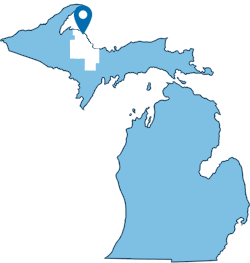
Big Bay, Michigan

Marquette County
Location: Upper Peninsula, Michigan
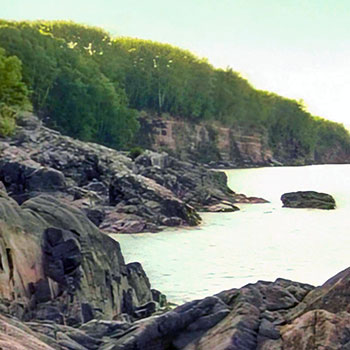
Marquette County is the largest county in land area in Michigan, and the most populous county in the Upper Peninsula of Michigan. Located in Michigan’s forested Upper Peninsula on the shores of Lake Superior, Marquette harbors a community distinguished by its natural surroundings — from rushing waterfalls and rock formations to scenic vistas and dense hardwoods. When the world’s largest freshwater lake is your backyard, that makes for some pretty remarkable views. Standing on the shores of Lake Superior is like looking out over a vast inland sea, with its crashing waves, tides, and sea monster lore.
From the expansive vistas of Lake Superior to the tranquility of our cool woodland forests, you don’t have to look far to take in some of the most remarkable scenery around. Babbling brooks, stunning waterfalls, secluded coves and sandy beaches are just a few of the natural wonders that abound. And our fall foliage can’t be beat. With 83 miles of shoreline, 150 streams, more than 300 lakes, and nearly 350 miles of trails, you will never run out of places and ways to explore. Whether you want to paddle, hike, bike, or shred down a mountain, you can enjoy a remarkable experience any time of year.
Big Bay
Location: Marquette County, Michigan (30 miles NW of Marquette)
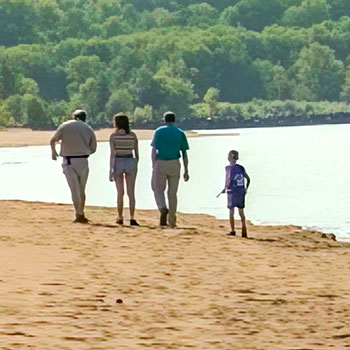
Big Bay is an unincorporated community in Marquette County established in 1875 by people involved in the lumber industry. Northwest of Marquette City, you will find a haven of lakes, forests, waterfalls, hiking trails, and hidden spots for outdoor adventure in Big Bay. Before Big Bay became one of the Upper Peninsula's best-kept secrets for outdoor enthusiasts, this quaint town was first established for the timber industry in the 1800s. In 1944 it was the site of a Ford Motor Company automotive plant and a retreat for Henry Ford and top company execs. Later Big Bay lit up the silver screen in James Stewart’s award-winning 1959 film “Anatomy of a Murder,” and was the site of the actual murder that inspired the film.
Today, Big Bay draws a quiet and loyal following for its unspoiled nature and access to the Big Bay of Lake Superior. Once you arrive, you will notice that Big Bay is almost like stepping back in time with its historic wooden structures and brick buildings in the small downtown. You won’t find Starbucks, fancy steakhouses, or consistent cell phone service here, but what Big Bay lacks in modern amenities, it makes up for in off-the-beaten-path adventure.
- Big Bay [Travel Marquette]
Henry Ford in Big Bay
Timeframe: 1940s
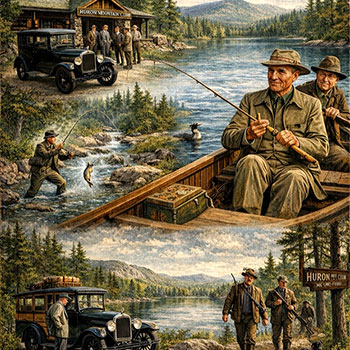
Henry Ford aimed to make the Ford Motor Company completely self-sufficient by owning all of the resources required to manufacture automobiles including lumber to make framework, floorboards and panels. Ford purchased over 313,000 acres of timberland and set up remote sawmills throughout the Upper Peninsula. In the early 1940s, Ford came up with a plan to revitalize Big Bay. Ford and his wife, Clara, had visited the charming community several times while staying at the nearby exclusive Huron Mountain Club and saw its potential both as a place to do business and relax. So in 1943, Ford purchased the sawmill, which still sits on Lake Independence today, and practically every building in Big Bay. By purchasing all of this property, Ford successfully transformed Big Bay into a Ford Motor Company town.
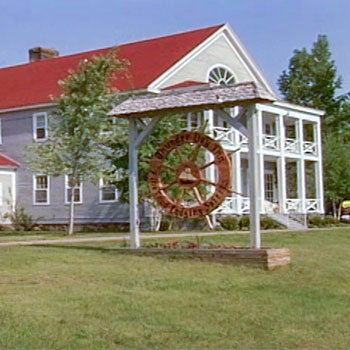
The Big Bay Hotel, which was later renamed the Thunder Bay Inn, was constructed in a beautiful colonial style, marked by handsome columns, two-story balconies, and a white clapboard facade. When Ford acquired the hotel, he spared no expense in transforming the hotel into a special vacation retreat. According to town lore, Ford made a habit of sitting on the hotel’s porch and watching the workers at his sawmill, all the while handing out dimes and nickels to local children to purchase something from the general store. Although Ford’s assets, including the hotel, were sold shortly after his death in 1947, Ford’s legacy in Big Bay remains. Visitors can stay in the automaker’s suite at the Thunder Bay Inn, sit on the front porch that once overlooked Ford’s sawmill, and enjoy the small-town charm that once enticed the famous entrepreneur.
- Big Bay: Henry Ford's U.P. Getaway [Travel Marquette]
Thunder Bay Inn (Big Bay Hotel)
Location: 400 Bensinger Street, Big Bay, Michigan
Phone: (906) 345-9220
This historical hotel is located in the heart of Big Bay, and overlooks Lake Independence. It was built in 1911 and began as a company store for local logging companies. So impressed with the structure of the building and the area, Henry Ford, in 1944 purchased and converted the facility into an Inn. The pub was added in 1959 for the filming of the movie "Anatomy of a Murder". The Inn features a large lobby with large fireplace, casual dining and beverage service, gift shop and fourteen rooms, all decorated with antiques and period styling. Conference facilities are also available. Located 25 miles north of Marquette on County Road 550, the Inn is open year round for the outdoor enthusiast from 11am to midnight daily.
The Historic Thunder Bay Inn is preserving and celebrating the rich historic heritage of Big Bay, focusing on the value of true stewardship of the wilderness, local cuisine, and traditions. The experience provides a unique opportunity for guests to connect with what matters in life; solitude and the rich outdoors.
Huron Mountain Outfitters
Location: 308 Bensinger Street, Big Bay, Michigan
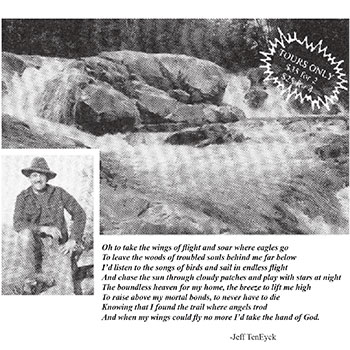
In the late 1980s and '90s, Jeff TenEyck’s energetic, charismatic personality got people out into the wilderness for a truly unforgettable excursion. His business, appropriately titled Huron Mountain Outfitters, included hiking and backpacking tours, mountain bike outings, hunting excursions and waterfall van tours. TenEyck’s tours were voted in U.S. News as one of the nation’s twelve best. Jeff took his guests to various waterfalls along the Yellow Dog River and Alder Creek, sometimes visiting others nearby as well. He was an avid fan of Robert W. Service, a Canadian poet and writer, and Jeff often recited his poetry at unexpected moments near a body of water or on a mountain top while gazing at panoramic views.
Today, Charlie Drury (friend and co-conspirator of old) uses Jeff’s business name, Huron Mountain Outfitters, for his bait and tackle, rental, and gift shop. Huron Mountain Outfitters is your one-stop-shop for locally roasted coffee by donation, live bait and rentals like e-bikes, kayaks, canoes, paddle boards and a fishing boat for your Big Bay adventure!
- "Back In The Day: Before Google Maps...There Was Jeff TenEyck" by Sarah Heuer (page 7) [The Howl - Spring/Summer 2024]
- Huron Mountain Outfitters [Facebook]
Ford Motor Company Sawmill
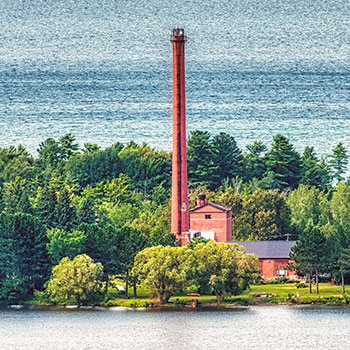
Location: Dam Road - Lake Independence, Big Bay, Michigan
In 1901, Big Bay Lumber Company constructed a sawmill near Lake Independence. In 1906, the sawmill closed and wasn't re-opened again until 1908, when Brunswick-Balke-Collender Company purchased it, renaming it Lake Independence Lumber Company. Henry Ford bought the mill in 1943, remodeled it, and built a new engine room, boiler room and 190-foot smokestack. Mr Ford died in 1947, but the mill operated until 1949, when Ford Motor Co. closed it for good, ending the lumber mill era in Big Bay. The Sawmill once owned by the Brunswick-Balke-Collender Company was famous for manufacturing most of the country’s bowling pins. Ford refurbished and reopened the factory as a manufacturer of wood panels for Ford automobiles in 1943. These panels were on the popular Woody Wagons. Despite its brief run as a Ford company town, the legacy of the Big Bay Ford Sawmill and the town’s connection to the industrialist remain a significant part of the community’s history. The sawmill still sits on Lake Independence today.
- Big Bay: Henry Ford's U.P. Getaway [Travel Marquette]
Lake Independence
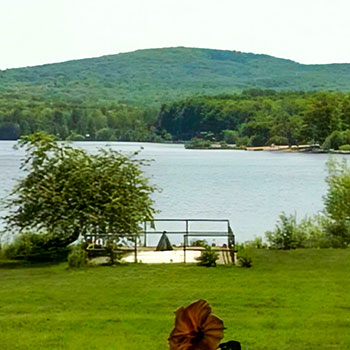
Location: Marquette County, Michigan
Lake Independence is fed primarily by the Yellow Dog River. The lake is naturally occurring, but its level has been stabilized and raised slightly to 625 feet above mean sea level by a dam. Outflow is the short Iron River, which flows slightly over one mile into Lake Superior. Lake Independence is 1,860 acres and reaches a depth of 30 feet. It contains many species of fish, including black crappie, bluegill, brown trout, cisco, northern pike, rock bass, smallmouth bass, walleye, white sucker, and yellow perch. The lake can be accessed by County Road 550. Its recreational uses include swimming and fishing. Lake Independence is the heart of Big Bay. During your visit, access the lake through Perkins Park Campground for swimming, boating, kayaking, and fishing. Day rates are available, and if you want a view of the shore with a longer stay, book a lakeside spot at the campground. Make sure to book early; summer slots fill up months in advance. Pick up a fishing license at Cram’s General Store across the street and enjoy fishing for Yellow Perch, Northern Pike, and Walleye year-round. If you’re an avid angler, be sure to check out the Big Bay 550 Snowmobile Club’s annual ice fishing derby in early February.
- Big Bay's Lakes and Beaches [Travel Marquette]
AuSable Light Station
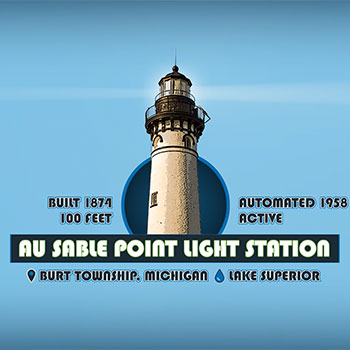
Location: Au Sable Point, 12 miles west (drive) of Grand Marais to the Hurricane River Campground then 1.5 miles (walk) east. Tours are available during summer.
Located within Pictured Rocks National Lakeshore, this picturesque lighthouse stands on Au Sable Point on the south shore of Lake Superior, approximately 12 miles west of Grand Marais, Michigan. Built in 1873-1874, the light tower's base diameter is 16 feet with a height of 86 feet. The tower extends 23 feet underground and is anchored in bedrock. A brick oil building and fog signal building were built in the 1890s. All of the buildings on site, along with the tower and keepers' quarters, make up the light station.
A third-order Fresnel lens reflected the first light, which was fueled initially by lard oil and then by kerosene. The fixed white beam could be seen 17 miles out on the lake. The lighthouse became fully automated in 1958 and transferred from the Coast Guard to the National Park Service in 1968. The lighthouse still operates - a smaller, solar-powered light now sits on the catwalk railing and shines over Lake Superior every evening.
- Pictured Rocks National Lakeshore - AuSable Light Station [National Park Service]